OVERVIEW
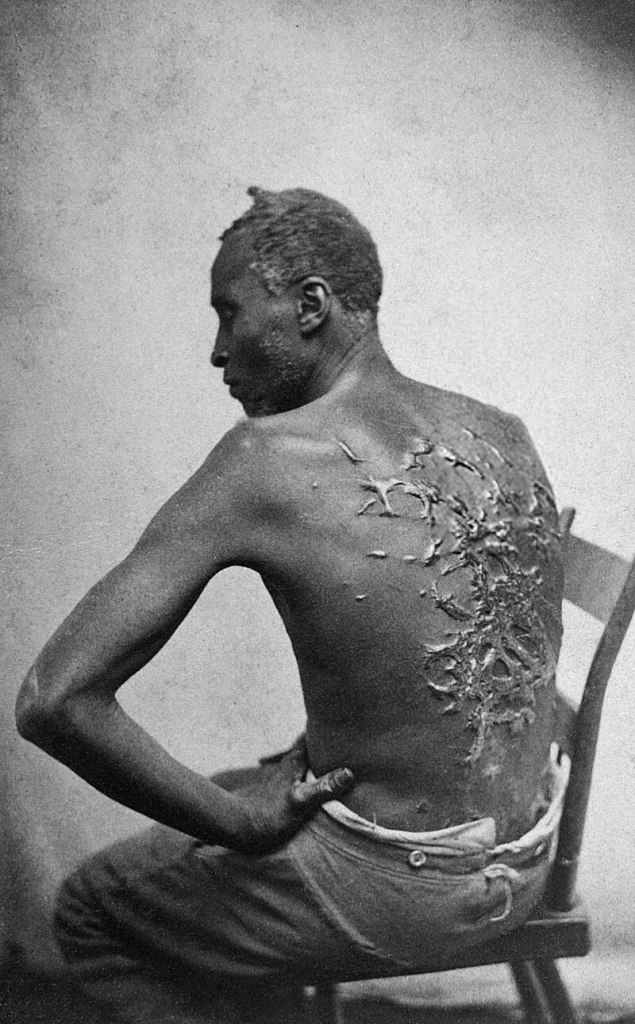
By 1860, at least 38 Black men, women, and children were enslaved on a cotton plantation near Washington in St. Landry Parish, Louisiana. They ranged in age from a one-year-old girl to a 60-year-old man and lived in ten dwellings recorded on the federal slave schedule. This was likely a multigenerational community of families: children growing up alongside parents and other adults, people working and living together over many years, and older residents carrying memories and family connections that predated the plantation community recorded in 1860. At least one person from this community emerges from the surviving record with a name and part of his story intact. Peter, later widely reported as “Gordon,” escaped from the plantation in March 1863 after surviving a severe whipping by overseer Artayou Carrier. He reached Union lines at Baton Rouge the following month. Photographs taken there documented the extensive scarring across his back, and one of those images circulated nationally as evidence of the violence of American slavery.
Their community had grown substantially in a relatively short period before 1860. Only eight enslaved people, ages 10 to 50, were recorded under John Lyons in 1850. Over the following decade, children may have been born into the community while other people arrived through the active movement and sale of enslaved people within St. Landry Parish. One especially important event occurred in 1853, when John Lyons Sr. died at Roberts Cove. Fifty-three Black people held in slavery as part of his estate were subsequently offered for sale. The timing makes this estate an important potential source for identifying some of the families who appear in the younger John Lyons’s much larger enslaved population seven years later.
Life for these families would have been shaped by cotton cultivation and its seasonal demands. Their labor sustained a plantation economy that extended far beyond the fields where they worked. Nearby Washington was one of the most important inland ports in the region, collecting cotton, sugar, livestock, and other agricultural products for shipment toward New Orleans. By 1860, 91 steam packets were operating in the Bayou Courtableau trade. John Lyons himself captained steamboats in this network and operated a freight warehouse at Washington Landing; his steamer Bayou Belle carried cotton, sugar, and molasses between the region and New Orleans.
For the Black families living on the plantation, the surrounding waterways, roads, landings, farms, and plantations could have formed a social world. St. Landry Parish was home to more than 11,000 enslaved Black people and nearly 1,000 free people of color in 1860. Family members and acquaintances could live on neighboring properties or elsewhere along the waterways, and enslaved people sometimes traveled between properties, were hired out to other employers, or visited spouses who lived elsewhere. The community at the Lyons plantation was therefore likely connected through kinship, friendship, work, and information networks to a much larger Black population throughout the region.
These connections existed alongside the constant danger of disruption. Sale, inheritance, debt, and estate settlements could move individuals or entire families from one property to another. St. Landry Parish court records document enslaved children and families being sold as part of estate proceedings during the 1850s. The 1853 sale of 53 people from the Lyons family estate would have brought these pressures particularly close to the families associated with the Lyons properties.
Daily life would also have included experiences that rarely entered the records created by enslavers: preparing food, caring for children, maintaining dwellings and clothing, tending to illness and injury, sharing information, forming relationships, and finding moments of family and community life around the demands of forced labor. The ten dwellings recorded in 1860 offer a small glimpse of the physical community in which these activities took place. The age distribution recorded by the census provides another: infants and children lived alongside adults and older people, making the plantation a place where Black families attempted to build and sustain lives under slavery.
Quick Stats:
- 38 enslaved in 1860
- 8 enslaved in 1850
- Location: St. Landry Parish, Louisiana
ENSLAVED PERSONS
Individuals and Families
- Peter (a.k.a. “Gordon”) – enslaved man who fled the Lyons plantation in March 1863 after being brutal whipped by overseer Artayou Carrier; photographed at Baton Rouge (April 1863).
U.S. Federal Slave Schedule Abstracts
- 1860: Jurisdiction – St. Landry Parish, Louisiana; Persons recorded – John Lyons (enslaver), 38 enslaved, 10 slave houses
- 1850: Jurisdiction – St. Landry Parish, Louisiana; Persons recorded – John Lyons (enslaver), 8 enslaved
ENSLAVERS
- Capt. John Lyons – Irish-born (County Leitrim), carpenter/ bridge builder, steamboat captain, and cotton planter near Washington, St. Landry Parish. Married Brigit (Bridget) Delia Fahey at Opelousas (Oct 30, 1845). Listed as a carpenter in 1850 and a planter by 1860; 8 enslaved (1850) and 38 enslaved (1860). Reported killed at his plantation in 1864 during the Civil War.
- Artayou Carrier (Pierre Arthéon Carrière) – overseer dismissed by Lyons after the whipping of Peter.
Enslaver Families
- Lyons family – Capt. John Lyons (b.c.1821–1822-d.1864, owner); wife: Brigit (Bridget) Delia Fahey Lyons (c.1820s-1864, m. 1845); children: Mary E. Lyons (b.1846), A. D. Lyons (b.1848), Ester P. Lyons (b.1850), Brigite Lyons (b.1852), Thomas G. Lyons (b.1856)
RESEARCH TO-DO
- Search St. Landry probate (estate files/inventories) and conveyances (bills of sale/hire) for additional named enslaved individuals and families on the Lyons plantation.
- Cross-reference with the 1870 US Federal Census for formerly enslaved persons potentially connected to Lyons.
- Check Baton Rouge Union provost marshal/hospital records (April 1863) for Peter/Gordon’s arrival, and medical notes.
- Add geo-coordinates for the plantation tract, using plats/ deeds.
SOURCES
- Harper’s Weekly. “A Typical Negro.” Vol. 7, no. 340 (July 4, 1863): 429–430. (Reproduction: Son of the South). SRC-HW-1863-07-04-ATN – http://www.sonofthesouth.net/leefoundation/civil-war/1863/july/whipped-slave.htm
- Smithsonian National Portrait Gallery. “Gordon (Peter)” – collection entry with context on the Baton Rouge photographs. SRC-SI-NPG-Gordon
- Silkenat, D. (2014). “‘A Typical Negro’: Gordon, Peter, and the Meanings of the Scourged Back.” Journal of American Studies. SRC-JAS-2014-Silkenat
- History.com, A&E Television Networks. “The Shocking Photo of ‘Whipped Peter’ That Made Slavery’s Brutality Impossible to Deny.” (Accessed Sept 21, 2025) SRC-HCOM-WhippedPeter – https://www.history.com/articles/whipped-peter-slavery-photo-scourged-back-real-story-civil-war
- Wikipedia. “John Lyons (Louisiana).” Biography of Capt. John Lyons (origins, marriage, occupations, 1850/1860 enslaved counts, death). SRC-WIKI-JohnLyons-LA – https://en.wikipedia.org/wiki/John_Lyons_(Louisiana)
- Lyons Shaw, Adonica. “Captain John Lyons of St. Landry Parish.” Lyons family website (archived Mar 4, 2016). SRC-WEB-LYONS-SHAW-2016-ARCH – https://web.archive.org/web/20160304082724/http://shawra.com/gen/index_files/Page1884.htm
- U.S. Census (Population), 1860. Louisiana, St. Landry Parish (Opelousas). Series M653, Roll 424, Page 954. Records of the Bureau of the Census, RG 29. SRC-POP-1860-LA-STLA-M653-424-P954
- U.S. Census (Slave Inhabitants), 1860. Louisiana, St. Landry Parish. Series M653 (roll/page pending). Records of the Bureau of the Census, RG 29. SRC-SS-1860-LA-STLA-M653-R??
- U.S. Census (Slave Inhabitants), 1850. Louisiana, St. Landry Parish. Series M432 (roll/page pending). Records of the Bureau of the Census, RG 29. SRC-SS-1850-LA-STLA-M432-R??
 Sankofagen
Misinformation Alert – Attempts to Rewrite “Whipped Peter’s” Story
The familiar photos of Peter, an enslaved man who was brutally beaten on the Lyons Plantation in Louisiana, show scars that are an irrefutable physical testament to the horrors of chattel slavery and the brutality of the enslavers. Not only is our current administration attempting to remove the photo from public displays, now “lost cause” advocates are seizing the moment to soften the story and deflect blame.
A Facebook post by Robert E. Lee Camp 1640, Sons of Confederate Veterans (https://www.facebook.com/share/p/1TdiQZrQUQ/?mibextid=wwXIfr) claims that the famous photograph of the enslaved man known as “Whipped Peter” was “Northern propaganda” and that he was whipped for trying to kill his wife. This framing is misleading and distorts the historical record.
Here’s what the evidence actually shows:
> Peter escaped from a Louisiana plantation in 1863 and reached Union lines near Baton Rouge. A medical exam documented his severe scarring from brutal whipping, and the famous photograph was taken at that time.
> The overseer was named Artayou Carrier (Pierre Arthéon Carrière). Contemporary sources record that Carrier whipped Peter so severely that he was bedridden for months. When the owner, Capt. John Lyons, saw the damage, he dismissed Carrier.
> Claims about “shooting his wife” are unreliable. In his own testimony, Peter said he did not remember such actions and denied harming anyone. These were second-hand reports others told him while he was recovering from trauma.
> “Most overseers were Black men” is false. While enslaved “drivers” sometimes supervised other enslaved people, the majority of overseers on large plantations were white. Historians have debunked this “Black overseer” myth, which shifts blame away from the white planter class.
> The image was abolitionist evidence, not “fake propaganda.” Abolitionists rightly used the photo to demonstrate the cruelty of slavery. The scars on Peter’s back are undeniable proof of violence inflicted under slavery.
Bottom line: The “Whipped Peter” photograph remains one of the most powerful visual documents of American slavery. Attempts to recast it as “propaganda” or to blame Black people for his suffering are distortions rooted in Lost Cause ideology.
LikeLike